
Best Day Trips From Madrid: Toledo, Segovia, El Escorial & More
Updated: Jan 28
Madrid has no shortage of things to do, but the area around the Spanish capital is full of places to explore, too. Here is a guide to some of the best day trips you can take from Madrid.

What's in this article:
Toledo
After the Christians successfully regained control of Iberia from Muslim rule, the Holy Roman Emperor Charles V established the capital of the new unified kingdom here in Toledo, which had also been the capital of the Visigoths who ruled Iberia before the arrival of the Muslims. Although his son Philip II subsequently moved the capital to Madrid, Toledo would remain a city of great symbolism for the Christians, with the powerful Archbishop of Toledo playing an outsized role in the politics of the kingdom.

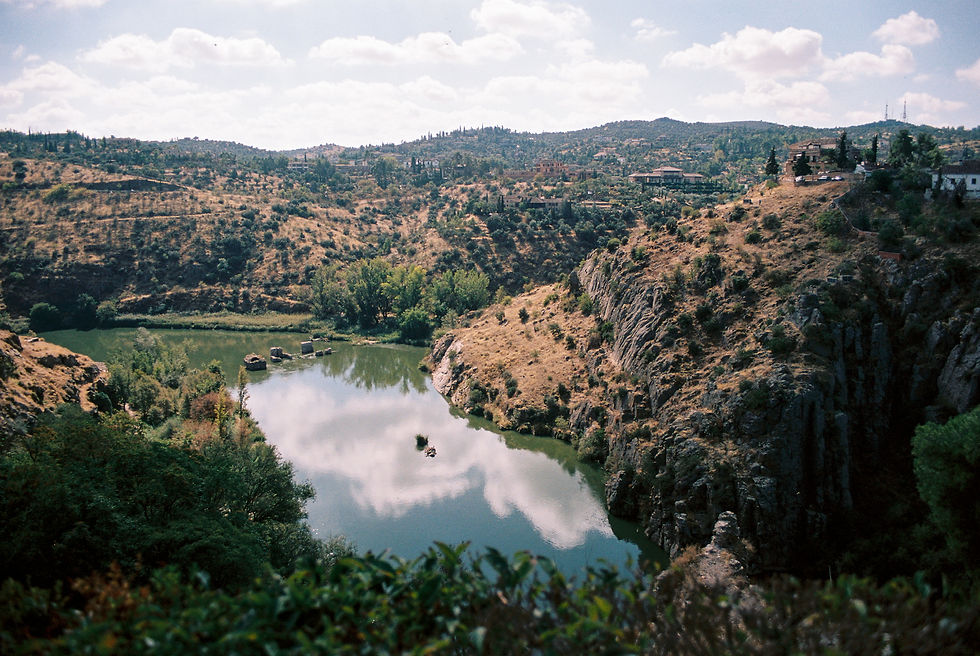
Toledo’s old city, perched on a plateau above the río Tajo, is fabulously preserved, and you can spend an excellent day (or more) exploring its treasures. The city’s magnificent Catedral is considered to be one of the finest works of Gothic architecture in Spain, while its interior holds a fantastic Baroque altarpiece known as El Transparente for the way in which it is illuminated by the natural light coming through the oculus above it.

The cathedral’s sacristy holds an impressive collection of works by El Greco, who spent the second half of his life living and painting in Toledo. Another of El Greco’s masterpieces on display in Toledo is the massive El entierro del conde de Orgaz, on display at the Iglesia de Santo Tomé.

Toledo also has numerous religious sites that serve as reminders of the city’s Jewish and Muslim communities, who made up an important part of the city’s life until their expulsion from Spain by royal decree at the end of the 15th century.
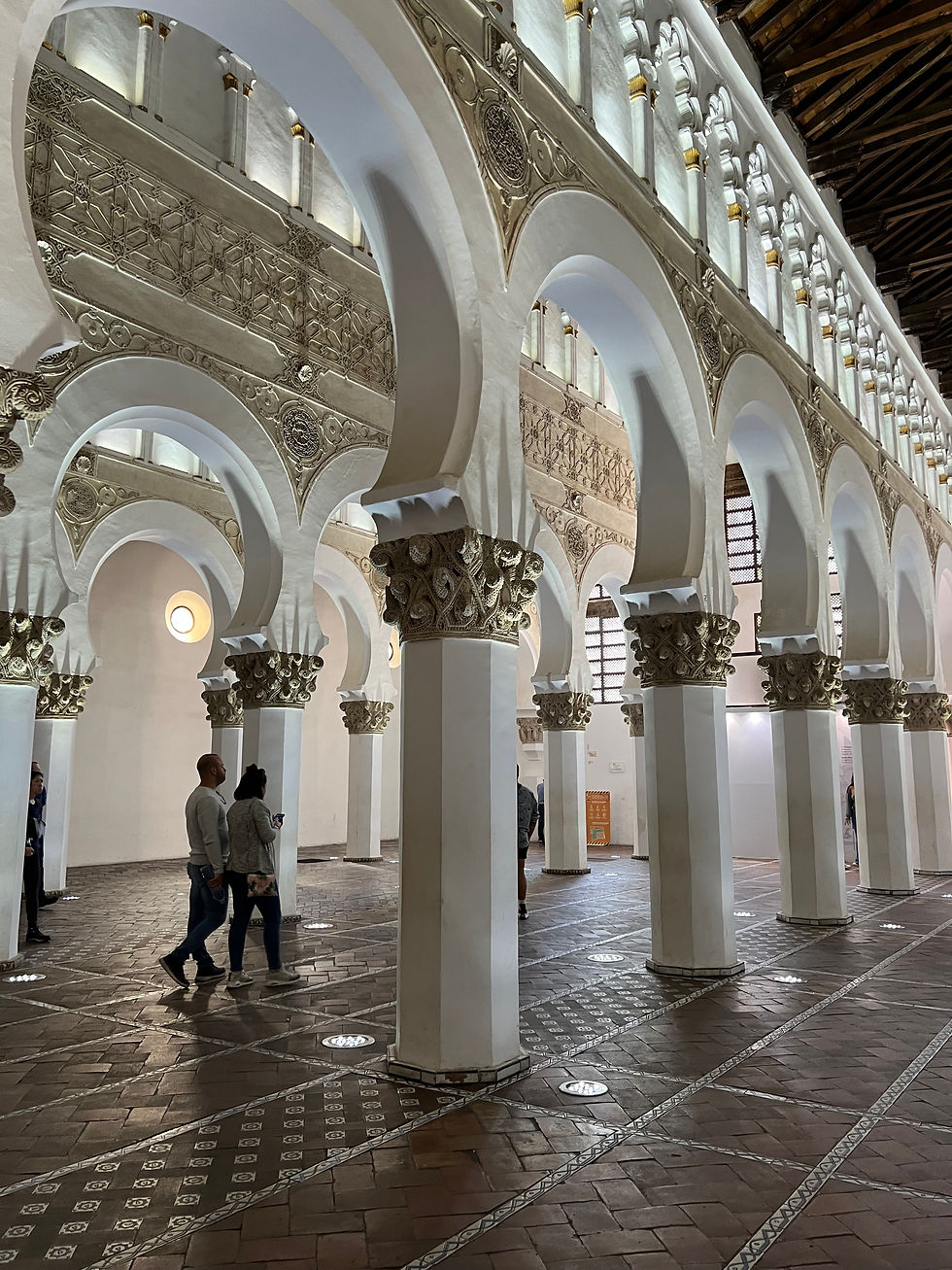
Of particular note are the Sinagoga de Santa María la Blanca, whose interior incorporated elements of Muslim architecture with its widespread use of the horseshoe arch, and the Mezquita Cristo de la Luz, a mosque that was converted to a church after the reconquista, resulting in a fascinating architectural fusion between the two religions. You can learn more about the history of Toledo’s Jewish community at the Museo Sefardí, housed in the impressive Sinagoga del Tránsito, whose interior was also heavily influenced by Moorish architecture.

After working up an appetite exploring the city, head to Restaurante Venta de Aires for a leisurely lunch, located next to the ancient Roman circus.

Opened in 1891, this restaurant is the oldest in the city and is as traditional as it gets—you’ll see photos of various Spanish and foreign dignitaries who have dined here, from the former king Juan Carlos I to the caudillo Francisco Franco to former US president Richard Nixon. Their house specialty is the perdiz estofada (stewed partridge).

Segovia
Segovia, located just on the other side of the Sierra de Guadarrama mountains from Madrid, is a charming city with two of the region’s most famous landmarks: its dreamy Alcázar and its fabulous Roman aqueduct.

Built in the 12th century, the Alcázar is one of the world’s most renowned medieval castles, and its great beauty inspired Walt Disney in his design of Cinderella Castle. The aqueduct, meanwhile, is one of the best preserved Roman aqueducts anywhere in the world. It was built in the 1st century AD to bring water from mountain springs to supply water for the city’s fountains, public baths, and private homes, and it remained in use until the 1970s. This impressive structure runs for 11 miles (17 km), and its stones are held together without any mortar or cement, a testament to the architectural and mathematical prowess of the ancient Romans.

Alcalá de Henares
Located directly east of Madrid, Alcalá is famous as a university town, having been home to the Universidad Complutense from its founding in 1293 by Sancho IV of Castille until its move to the capital in 1836. In fact, Alcalá was the world’s first planned university town: Cardinal Cisneros, who had studied at the university, obtained a papal bull at the end of the 15th century giving him permission to greatly expand the Complutense, transforming it into one of Europe’s foremost academic centers.

Cisneros set about on a massive construction project, creating a campus modeled on the Augustine philosophy of the Civitas Dei (City of God), a community dedicated to the pursuit of righteousness through love of God and study of religious and academic pursuits.

This ‘ideal city,’ with an urban plan in accordance with humanist principles, proved to be a highly influential urban planning principle that would later be spread to the New World as the Spanish constructed new cities in their colonies there.

Spend a lovely afternoon wandering the historic center of the town, which serves as the campus for the modern Universidad de Alcalá. Some points of interest include the Colegio Mayor de San Ildefonso on the central Plaza de San Diego, the Convento de San Bernardo, and the Catedral Magistral. You can also visit the childhood home of Miguel de Cervantes, author of Don Quixote and widely considered the greatest Spanish-language writer in history, at the Museo Casa Natal de Cervantes.

San Lorenzo de El Escorial
In the foothills of the Sierra de Guadarrama northwest of Madrid, the palatial Monasterio de El Escorial stands out in austere beauty against a stunning natural backdrop. Built over the course of two decades by Philip II, the site is the largest Renaissance building in the world, and the complex served as both a monastery and a royal retreat away from the confines of the capital.

The building’s unique, sober design gave birth to a new style known as herreriano that would dominate Spanish architecture for the following century. The complex is also famous for its enchanting gardens as well as its impressive library, home to a large collection of rare books and manuscripts in Latin, Greek, Arabic, and Hebrew.

Cuenca
The old town of Cuenca, almost halfway between Madrid and Valencia, sits on a rocky plateau between the gorges of the Júcar and Huecar rivers. Originally founded as a Muslim defensive outpost in the 8th century, the city grew to become an important regional center of agricultural and textile production. Today, it is home to a lively, colorful historic center that makes for a perfect afternoon of exploring.

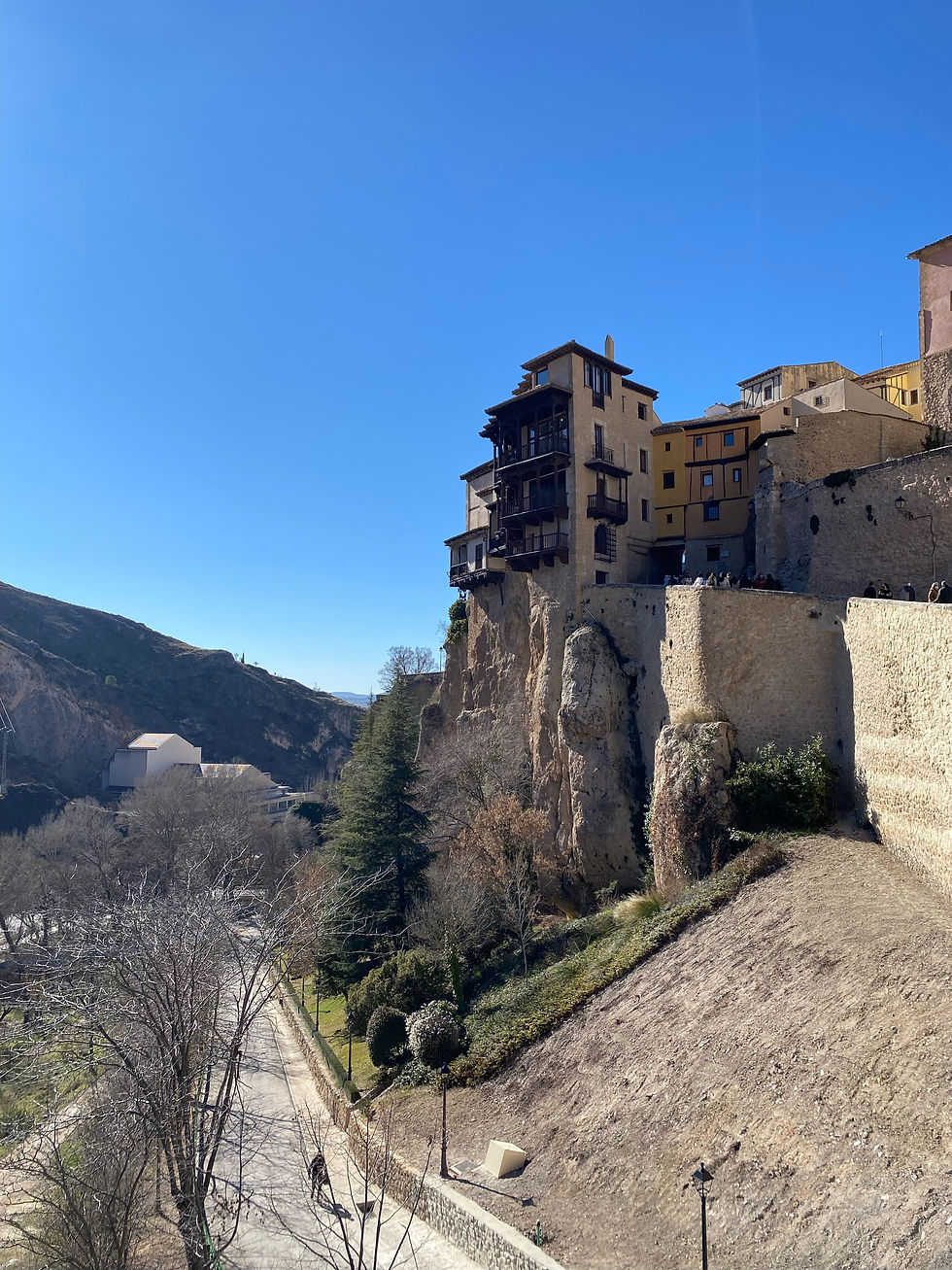
While exploring the old town, be sure to check out the 12th-century Catedral, with its uniquely Anglo-Norman design, as well as the famous Casas Colgadas (Hanging Houses), built on a precipice above the river.

You can get a great view of these houses from the Puente de San Pablo, which leads across the river to the Convento de San Pablo, now a luxury hotel under the state-owned Paradores de Turismo brand. There is also a short walking trail nearby that leads slightly uphill and offers fantastic views looking back at the town.
Looking for tips on what to see and do back in the city? Visit our Madrid page here.


