
A Guide to Valencia, Spain: Top Attractions, Historic Center, Parks & Beaches
- Jul 18, 2025
- 4 min read
Updated: Jan 28
Valencia, on Spain’s eastern coast, is an archetypal Mediterranean city, offering visitors a wonderful combination of history, climate, green space, beach, and cuisine.

In the 15th and 16th centuries, Valencia was a thriving mercantile center, growing to become one of the largest cities in Europe as a center of trade in the Mediterranean world. Today, it is a city with an exceptionally high quality of life and a lovely balance of old and new. Read on for a guide to exploring the city, from its large historic center to its green outer neighborhoods.
Seu de València
Located in the heart of the historic center, Valencia’s cathedral is a great place to begin your visit. Built in the 13th century, the cathedral is a landmark work of the Valencian Gothic style, and its bell tower, known as El Micalet, is an emblem of the city and is visible from all over. In addition, one of the cathedral’s chapels houses a Holy Chalice that is considered by some to be the true Holy Grail.

The cathedral can be appreciated from the inside or from the two plazas on either side of it, the Plaça de la Reina and the Plaça de la Mare de Déu.

Llotja de la Seda
The city’s 15th-century Silk Exchange is another marvelous example of the Valencian Gothic style. Silk was one of Valencia’s major exports during its time as a trading center, and the city’s elites sought to construct a new building to serve not only as a place of commerce but also as a reflection of their wealth and status as a mercantile power.

Entering from the street through the charming courtyard of orange trees known as the Pati dels Tarongers, make your way up the steps to the Sala de Contratació (Trading Hall), a monumental room with huge, twisting columns soaring up to the intricately designed ceiling. The marble floor reflects the light coming through the large windows, making for a stunning overall experience.

Mercat Central
Valencia’s fabulous central market is one of the largest in Europe, covering some 86,000 square feet (8,000 m2). The market is an architectural marvel, built in the Art Nouveau style with an iron roof and a large dome in the center with windows that flood the market with natural light. It is also a great place to get to know Valencian cuisine, with stands offering different traditional snacks as well as fresh produce, meat, cheese, fish, and seafood.

I recommend visiting La Huertana, a classic spot for orxata. Though there are different varieties of horchata across Latin America, Valencian orxata is made from xufa (tiger nuts) that are soaked, ground, and sweetened. The cold, sweet drink is traditionally served with fartons—long, glazed pastries made for dipping.

Església de Santa Caterina
Another 13th-century Gothic church, this church dedicated to Saint Catherine was built on the site of a former mosque adjacent to the modern-day Plaça de la Reina. It is also famous for its belltower, which occupies the same place as the old minaret. Close by, take a look at the Plaça Redona, a charming circular plaza with small shops and restaurants.

El Carme
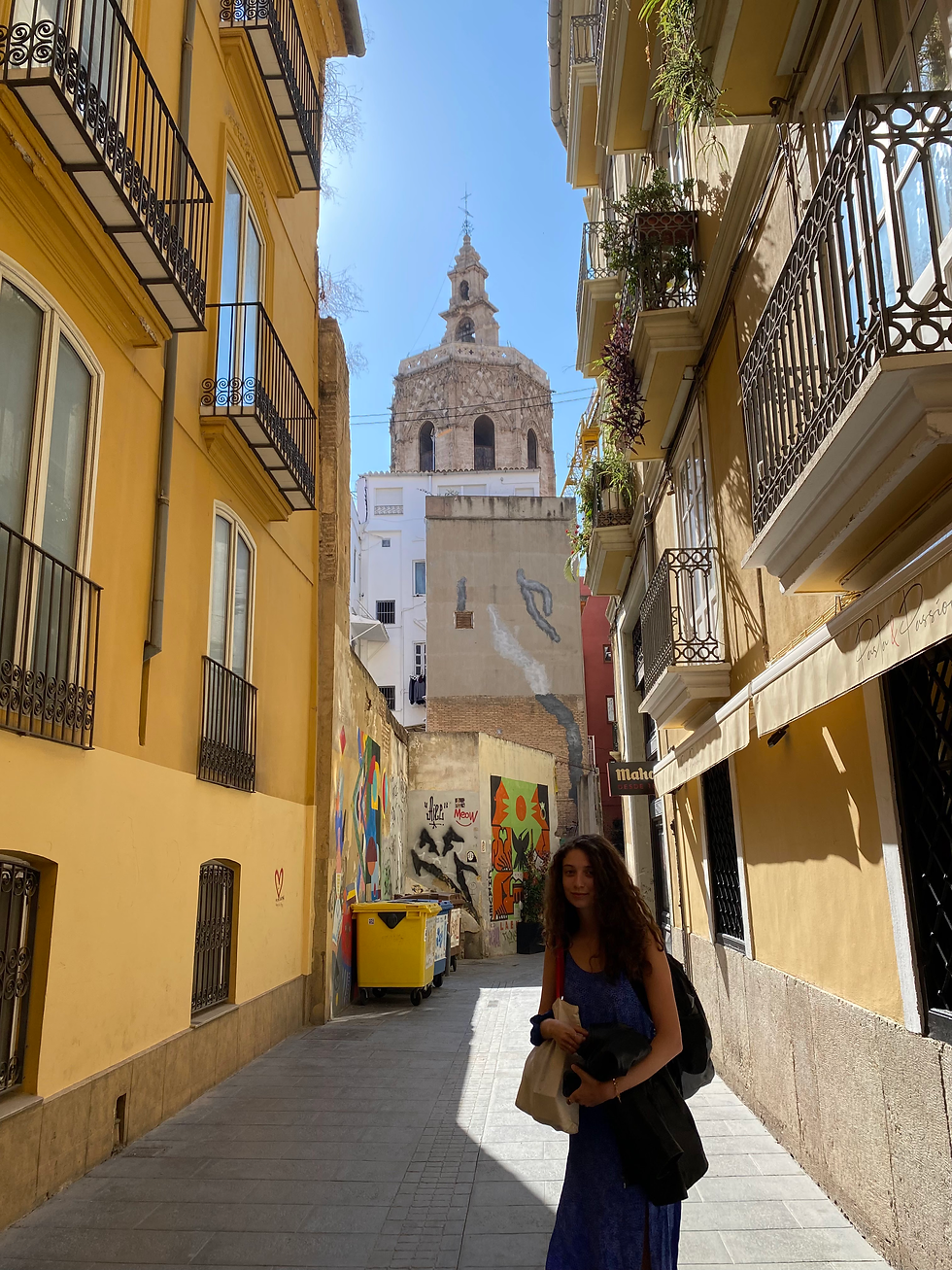
Located just outside of the original Arab city walls, El Carme is one of the city’s oldest extant neighborhoods. Brought into the expanded city center under the Christian rule of Jaume I, the area was home to artisans like tanners and velvet weavers. One section was also designated as the Moorish quarter where Muslims were to live, demarcated by the Portal de la Valldigna.
Today, the neighborhood retains its medieval character, made up of narrow, winding streets and tall, brightly colored houses. This is a fantastic place to wander or to ride a bike, which you can rent at many places around the city.
Torres dels Serrans
These monumental towers are one of the few remaining traces of the expanded Christian wall that protected the city. Built at the end of the 14th century in Valencian Gothic style, they are one of the city’s most emblematic landmarks. They can be found at the edge of El Carme, with the Túria river on the other side forming a natural barrier delineating the northern limit of the old city.
Jardí del Túria
The Túria was a powerful river that was extremely prone to flooding, causing lots of death and destruction in Valencia over the centuries. For this reason, city officials embarked on a large project in the 1960s to divert the river, splitting it into two at the city’s western outskirts and sending most of the water flowing south of the city.

The river’s original course just north of the historic center was converted into a massive green space, one of the largest urban parks in Spain. Running more than six miles (10 km) long, nearly the entire width of the city, the park is filled with paths for walking and biking and is a very pleasant place to spend an afternoon.
Ciutat de les Arts i les Ciències
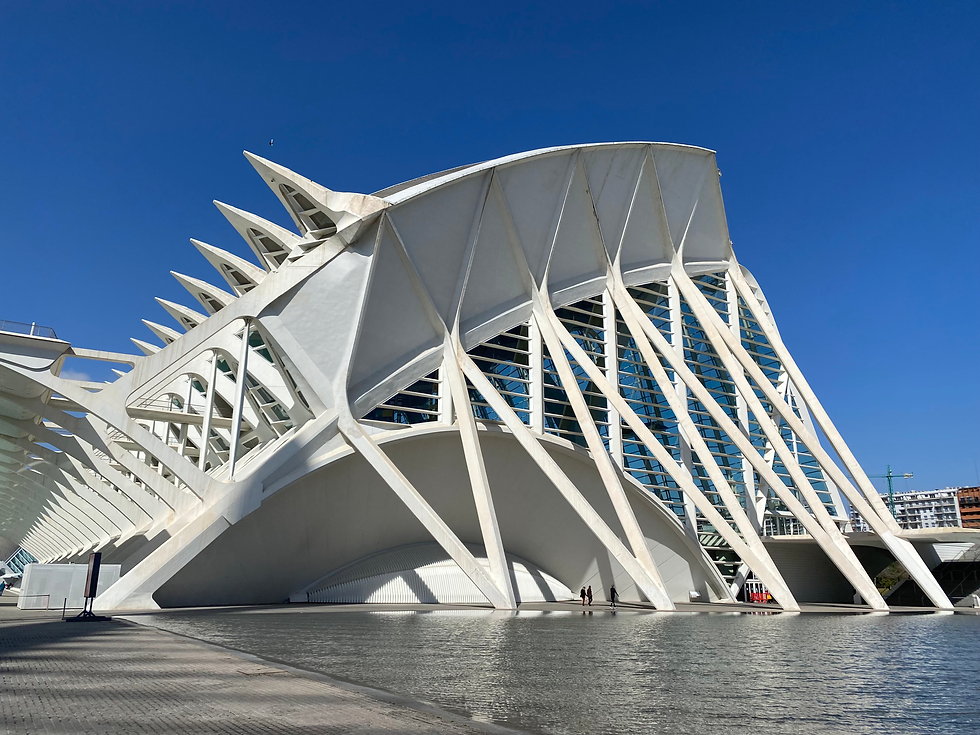
This massive complex at the eastern end of the Jardí del Túria is a hugely important work of modern architecture from the hand of Valencian architect Santiago Calatrava. Composed of many different buildings, the three main structures are the Palau de les Arts (an opera house and performing arts center), L’Hemisfèric (a planetarium and IMAX cinema), and the Museu de les Ciències (an interactive science museum).

Just the architecture here is enough of an attraction, as these striking buildings are eye-catching and can be appreciated differently from different perspectives.
Camp de Mestalla
This iconic football stadium is home to Valencia CF, six-time champions of Spain. The 49,000-seat ground is famous for its extremely steep North Stand, which practically hovers over the pitch. The game-day atmosphere in and around the stadium is great, but it’s also worth a visit from the outside for football fans.

Beaches
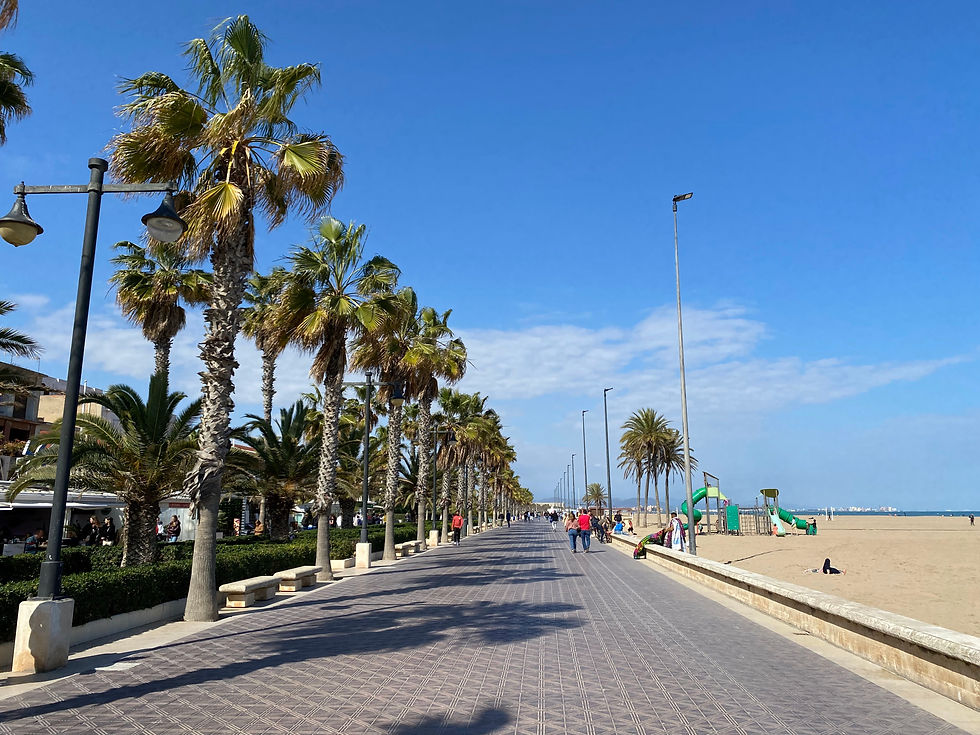
Valencia doesn’t have the feel of a beach city, and yet it enjoys easy access to the Mediterranean with sandy beaches just a short trip from the city center. On a nice day, you can take a leisurely bike ride through the Jardí del Túria and cut over to the beach in less than half an hour. Check out the long stretch of sand divided between the beaches of Platja de les Arenes, Platja del Cabanyal, and Platja de la Malva-rosa. For a nice seaside lunch, try Las Carabelas near Les Arenes.
Looking for more places to explore in the region? Visit our Comunidad Valenciana page here.


