
Best Places to Visit in Mexico City: Art, Culture, and History
As a thriving cultural hub and one of the largest cities in the Western Hemisphere, Mexico City is home to an almost dizzying array of sights to see and places to visit. There is no shortage of things to do, but this guide will help you make the most out of your time in this great metropolis.

Teotihuacán
Beginning chronologically, the ancient city of Teotihuacán is one of the most important archaeological sites in all of Mexico. Located around 25 miles (40 km) northeast of Mexico City, Teotihuacán actually predates the Aztec Empire, the indigenous civilization that is more commonly associated with the region; during its heyday in the first half of the 1st century AD, Teotihuacán was the largest city in the Americas and one of the largest in the world, with an estimated population of between 25,000 and 100,000 people.

The city’s main function was as a religious center, with leaders of far-away civilizations routinely making pilgrimages to the city—a sort of Mesoamerican Mecca. This legacy is clearly visible in the two stunningly massive pyramids that are the site’s crown jewels: the Pyramid of the Sun and the Pyramid of the Moon, the latter of which can be climbed to appreciate the ancient city’s impressive scale.

When the Aztecs arrived at the site nearly a thousand years after it had been abandoned, they were so awestruck by the construction that they christened it Teotihuacán, “birthplace of the gods” in Nahuatl. According to their belief system, the universe had been submerged in darkness until the gods gathered at the pyramids of Teotihuacán, where they sacrificed themselves in a blazing fire; from their ashes arose the sun and the moon, giving life to our current era.

I highly recommend visiting the archaeological site with a licensed guide, as this will offer a much deeper understanding and appreciation of what you see. He or she can also help you with transport to and from Mexico City. We are happy to connect you with a guide—reach out to us on our Instagram or by email.
Chinampas of Xochimilco
Though most tourists visit Xochimilco to ride on the party boats known as trajineras, the canal system in the city’s southeast is another excellent place to learn about the ancient civilizations of the region.

Prior to the arrival of the Spanish conquistadores, most of the area that is now Mexico City was completely covered by Lake Texcoco, with the main human settlement concentrated at Tenochtitlan, a small island at the western edge of the lake. The Aztecs had created a complex system of dikes and aqueducts to manage the water level of the lake, but this system was dismantled by the Spanish, provoking catastrophic flooding and leading the colonial authorities to embark on a centuries-long process to completely drain the lake.

Today, the only remnant of the city’s lacustrine past are the canals of Xochimilco, which run for around 106 miles (170 km) over an area of 6,400 acres (2,590 ha) of protected wetlands. The canal system weaves between the man-made islands known as chinampas, brilliant feats of engineering that are a testament to the ingenuity of the Aztecs to adapt to a harsh environment.

The chinampas were developed to maximize agricultural production, creating areas of fertile land on the surface of the lake. Though you may seem them referred to as ‘floating gardens,’ the chinampas do not float; they are built up from the lake bed using an ingenious system of layering, alternating between aquatic weeds, decaying vegetation, organic compost, and nutrient-rich mud dug up from the bottom of the lake. These layers are held together by an underwater fence of wooden stakes and woven reeds, which are in turn anchored by Mexican willow trees, whose roots take hold in the lake bed and protect the island against erosion.

This technique proved to be extremely productive for agriculture, as the submerged subsoil constantly draws in moisture from the lake water and filters it upward to the roots of the crops, meaning that very little irrigation is necessary for the crops to flourish. Some areas of Xochimilco are still home to small-scale organic farming, and a visit to one of these chinampas is an excellent opportunity for ecotourism.

I recommend going with Humedalia, a nonprofit dedicated to conservation and restoration of the wetlands that offers excellent guided tours of their chinampa. You will travel by canoe along the canals before reaching their farm, where you will learn more about the agricultural process and enjoy a delicious lunch of produce that is all grown on-site. This is really an incredible experience and is far more rewarding than the typical tourist party boat experience.
Museo Nacional de Antropología
Mexico’s National Museum of Anthropology is home to an incredible collection of artifacts from pre-Columbian Mexico, showcasing the wide range of civilizations who lived here for many thousands of years before the arrival of the Spanish colonizers. The museum, which is itself an architectural marvel, is organized into exhibition halls by civilization, offering the chance to learn about these societies in isolation while also appreciating their cultural and political connections to one another.

I recommend going through the museum at your own pace, as there is a huge wealth of treasures to explore—the stone carvings of the Aztecs, the gold jewelry and jade masks of the Zapotecs and Mixtecs in Oaxaca, the colossal heads of the Olmecs along the Gulf Coast, and the funerary offerings of the Maya, to name a few. Arguably the most famous artifact is the Piedra del Sol, a 54,000-pound (25,000 kg) stone with elaborate carvings that illustrate the Aztec cosmos and mythological creation cycles while emphasizing the paramount role of human sacrifice in keeping the universe moving.

The museum is huge and is certainly deserving of multiple visits, so I recommend taking your time and only visiting as much as you can digest.
Casa Gilardi
In addition to its incredible ancient constructions, Mexico City is also full of modern architectural gems, many of which are private homes tucked away in residential neighborhoods. One such example is Casa Gilardi, the last house designed by Luis Barragán, the preeminent Mexican architect of the 20th century.

Commissioned in the mid-1970s by a pair of advertising executives, one of whom’s widow still lives there, the house is considered Barragán’s magnum opus, although he designed it toward the end of his life after nearly a decade of inactivity. In fact, Barragán initially turned down the project; it wasn’t until he visited the site and saw the beautiful jacaranda tree in the center of the property that he decided to accept the offer and build the house around this tree. If you are lucky enough to visit in the spring, you will be able to see the jacaranda (here and all around the city) in full bloom, with its lovely purple petals covering the courtyard like a luxurious carpet.

Light and color were always central components of Barragán’s work, and the architect used them to perfection here, especially in the long corridor that leads down to the incredible indoor swimming pool. Each and every corner of the house, inside and out, is meticulously planned and well executed, making use of shadows and natural light to create a masterpiece of the senses.

Guided tours are available a couple of times a week and are led by the son of the original owner, who is a very friendly and extremely knowledgeable young man who has the unique perspective of having grown up inside these colorful walls. It’s a special experience that you won’t want to miss, so I recommend visiting the house’s website at least a few weeks before your trip to arrange your visit.
Coyoacán
Coyoacán is one of a handful of areas in the south of Mexico City that used to be their own separate villages. The area is one of quiet cobblestone streets that open up to vibrant plazas lined with colorful colonial buildings, preserving a small-town charm in the midst of the big city.

Coyoacán began as a Tepanec settlement on the southern shore of Lake Texcoco, with its name given by the Aztecs who arrived a couple of hundred years later, meaning “place of those who have coyotes” in Nahuatl. The Tepanecs resented Aztec rule and actually welcomed the arrival of Hernán Cortés and the Spanish, allowing them to use the village as a port while they ransacked Tenochtitlan, the Aztec capital, located around seven miles (10 km) north (at the site of today’s Centro Histórico).

The Spanish would, of course, end up subjugating both of the indigenous civilizations, and Cortés took up residence here in Coyoacán and made it the first capital of New Spain, though the capital would soon move north to the newly founded Mexico City, built on top of the ruins of Tenochtitlan. Coyoacán remained a colonial village independent of Mexico City, filled with large haciendas and monasteries and separated from the capital by lakes and farmland.

As Mexico City expanded over the following centuries, Coyoacán gradually became more linked to the big city, though it still maintained its separate air. The neighborhood became well known as an artist enclave, attracting residents like the writer Octavio Paz, the actress Dolores del Río, the Soviet political exile Leon Trotsky (who was murdered by a Soviet agent in his home here), and, most famously, Diego Rivera and Frida Kahlo, the latter of whom grew up and spent most of her adult life in her family’s home here. The Kahlo family’s charming home, known colloquially as La Casa Azul (the Blue House), is one of Mexico City’s most famous museums and is well worth a visit (book your tickets several weeks in advance).

I also recommend visiting the bustling municipal market and taking a stroll around the twin plazas of Jardín Hidalgo and Plaza Coyoacán. On your way up to the center of town, grab a café de olla (traditional Mexican coffee brewed with cinnamon, cloves, star anise, and sugar) at Café El Jarocho, a neighborhood institution open since 1953. The energy in the town really picks up in the late afternoon and early evenings; stick around for dinner at Taquería Pepe Coyotes, where the house specialty are their alambres, plates of grilled meat and vegetables topped with melted cheese and served alongside tortillas for making your own tacos.
San Ángel
San Ángel is another charming area that was originally a small village centered around a monastery before being absorbed into the urban expansion of Mexico City. Besides its small-town feel, one of the main attractions here is El Bazar Sábado, a fantastic artisan market held every Saturday around the Plaza San Jacinto. This is a fantastic place to shop for handicrafts, with local artists selling paintings, jewelry, ceramics, and much more. I recommend going in the morning to avoid the huge crowds that gather in the afternoon.

San Ángel also played an important role in the life of Frida Kahlo, as it was home to the house and studio of her husband, the famous painter and muralist Diego Rivera. Though Kahlo lived on the property for only a few years, Rivera spent more than two decades living and working at his house-studio, which is an architectural masterpiece in its own right. The property is open as a museum and is quite easy to visit—there is no need to reserve your tickets in advance like you need to for La Casa Azul across town.

After visiting the studio, head over to the San Ángel Inn right next door for a drink or perhaps a bite to eat. Originally a Carmelite monastery, the current building dates to the late-18th century, when it served as the manor house of a hacienda, a large agricultural estate. A relaxing drink on the patio and a stroll through the lovely gardens make for a perfect way to unwind after a day of sightseeing.

Centro Histórico
Mexico City’s historic center sits on the exact spot of Tenochtitlan, the ancient Aztec capital, which was razed to the ground by the Spanish conquistadores and replaced by their colonial and religious buildings. The neighborhood is home to the Zócalo, the city’s main plaza which is the largest in Latin America, as well as a number of other historic buildings and businesses that offer a window into Mexico City’s past.

One of the more impressive buildings in the historic center is the Palacio de Bellas Artes, a massive work of marble that is so heavy that it is actually sinking into the soft clay surface of the drained lakebed at a rate of one inch (2.5 cm) per year. The building represents an interesting lesson in architectural styles: construction began in 1913 with an Art Nouveau style, but work was halted for two decades during the Mexican Revolution before being completed in the 1930s, leaving it with a decidedly Art Deco interior. The palace is home to an incredible collection of murals by renowned artists like Diego Rivera and David Alfaro Siqueiros, many of which pay homage to Mexican folklore and tell the story of the country’s past and present.

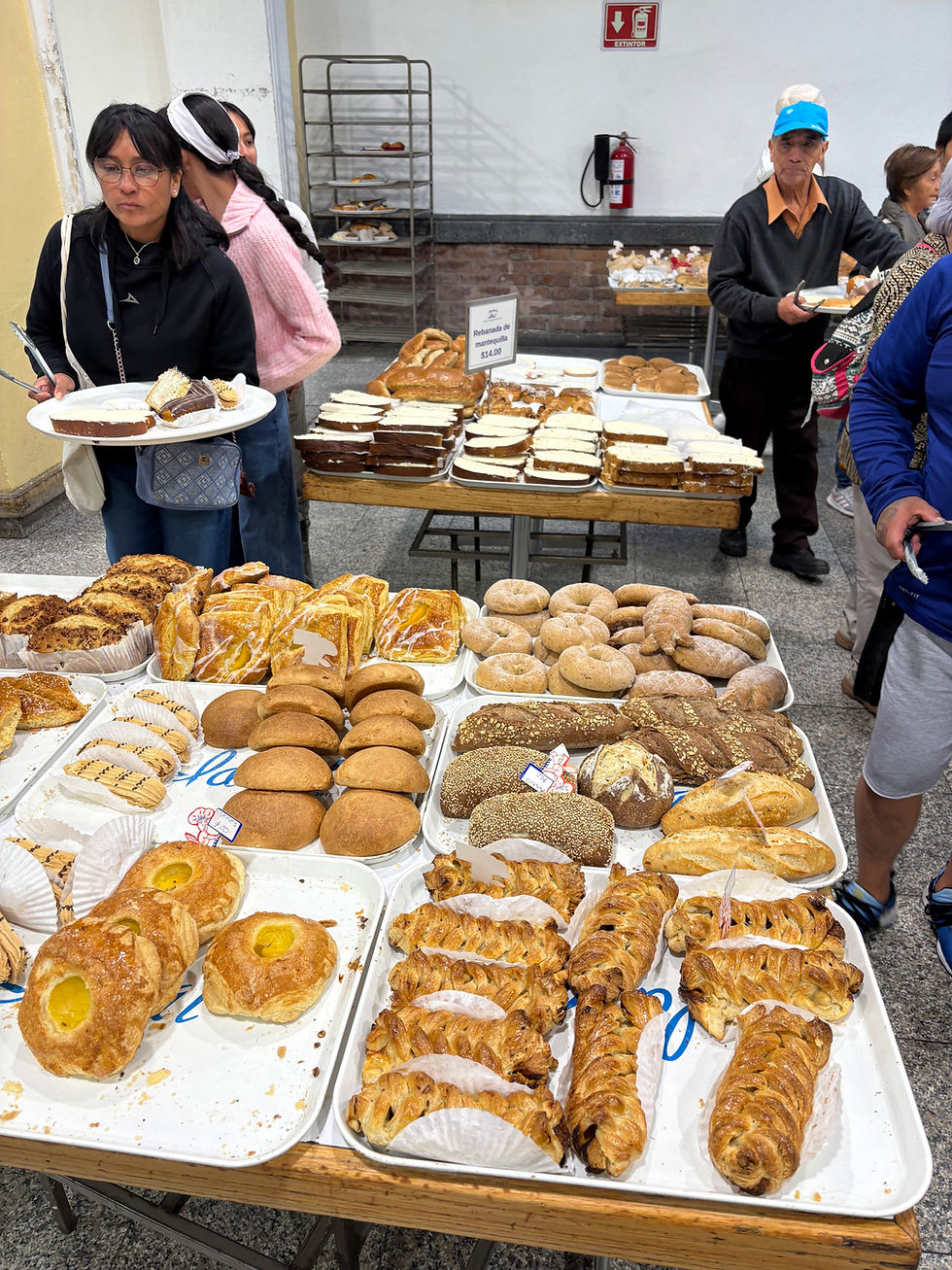
The historic center is also home to a number of legendary establishments that offer a traditional taste of the city. One such restaurant is El Cardenal, a local institution that prides itself on showcasing popular cuisine from across the country, offering something of a culinary tour of Mexico with classic preparations of homestyle dishes from different regions of Mexico. Even more famous is the original location of Churrería El Moro, open since 1935 and renowned for their delicious churros—long, thin pieces of fried dough dusted with cinnamon sugar and served with hot chocolate for dipping (and drinking). Yet another iconic spot is Pastelería Ideal, a favorite local bakery open since 1927 where you grab your own tongs and walk around piling your huge tray with as many treats as your heart desires.
Lucha Libre
Though the national sport of Mexico is football, one of the most popular (and most entertaining) is lucha libre, the style of professional wrestling that has been practiced in Mexico for more than a century. Famous for their iconic colorful masks and high-flying aerial moves, this form of mock combat is a real spectacle, with flamboyant characters, grandiose entrances, and raucous local crowds.

The best show of the week takes place at the Arena México just east of Colonia Roma, with tickets easily available for purchase on Ticketmaster. Sit ringside for the best view or up in the cheap seats for the best atmosphere, and be sure to flag the roaming vendors for some micheladas, the famous mix of beer with lime juice, salt, tomato or Clamato juice, and hot sauce that is the drink of choice for lucha libre.
Estadio Azteca
The Estadio Azteca is a veritable temple of football, having played host to some of the most legendary moments in the history of the world’s game. It is the only stadium in the world to have hosted two World Cup finals, which were won by Pele’s Brazil (1970) and Maradona’s Argentina (1986); the stadium was also the site of Maradona’s ‘Hand of God’ and ‘Goal of the Century’ in the 1986 quarterfinal against England, which are arguably the most infamous and the most famous goals in the sport’s history.

The Azteca is the home stadium of local clubs Club América and Cruz Azul, but the best experience is to attend a match of El Tri, the Mexican national team, when the massive stadium will be completely full and the energy inside will be electric. Mexicans are famous for their passionate support and intense scrutiny of their often underperforming team—win or lose, you’ll experience a great atmosphere, full of cheering, booing, or maybe a bit of both.

I recommend using Uber to travel to and from the stadium—just be sure to leave yourself plenty of extra time to sit in the city’s infamous traffic, and be prepared to walk the last half-mile or so to the stadium once you reach a standstill.


