
The Best Classic Restaurants in Rio de Janeiro, From Botecos to Churrascarias
Updated: Dec 24, 2025
From white-tablecloth establishments to bustling neighborhood botecos, Rio is home to a dazzling array of classic restaurants, many of which date from the mid-20th century, when the city burst onto the international scene with its sandy beaches and bossa nova rhythms gaining fame far beyond its borders. Besides their delicious food, these restaurants contain decades of history as well, and a meal at any of them is a great way to experience the fabric of the city. Read on for a guide to the best classic restaurants of Rio de Janeiro.

Café Lamas
Opened in 1874 on the Largo do Machado in the heart of Flamengo, Café Lamas is the oldest restaurant in the city and has long been a favored haunt of Brazilian politicians and intellectuals. The restaurant’s list of patrons reads like a history of Brazil itself, including the architect Oscar Niemeyer, the writer Machado de Assis, and presidents Getúlio Vargas and Juscelino Kubitschek. Another regular customer was Oswaldo Aranha, the politician and diplomat whose name has been immortalized in the filé Oswaldo Aranha, his favorite dish, consisting of steak topped with fried garlic and accompanied by white rice, fried potato sticks, and farofa (toasted cassava flour).
Though the construction of Rio’s metro system in the 1970s forced the restaurant to move to a new space a couple of blocks away, it hasn’t lost any of its charm. I recommend ordering the Oswaldo Aranha steak or the parmegiana, a breaded steak cutlet topped with tomato sauce and cheese.
Galeto 183
This unassuming spot west of Centro might not look like much from the outside, but step inside and you’ll be greeted by the warm hospitality of this local favorite open since 1981. It’s a favored haunt of journalists from Globo, Brazil’s largest mass media group, whose offices are located right around the corner.

On Wednesdays, the restaurant serves the famous Angu do Gomes, a hearty polenta stew with beef, oxtail, bacon, and gravy. This dish is an icon of days past, when the Portuguese immigrant Manuel Gomes served his creation from streetcarts around the city in the 1950s and 1960s. Dona Ana, the owner of the restaurant, prepares the stew according to Gomes’s recipe, which was given to her by his son and is displayed on the wall of the restaurant.
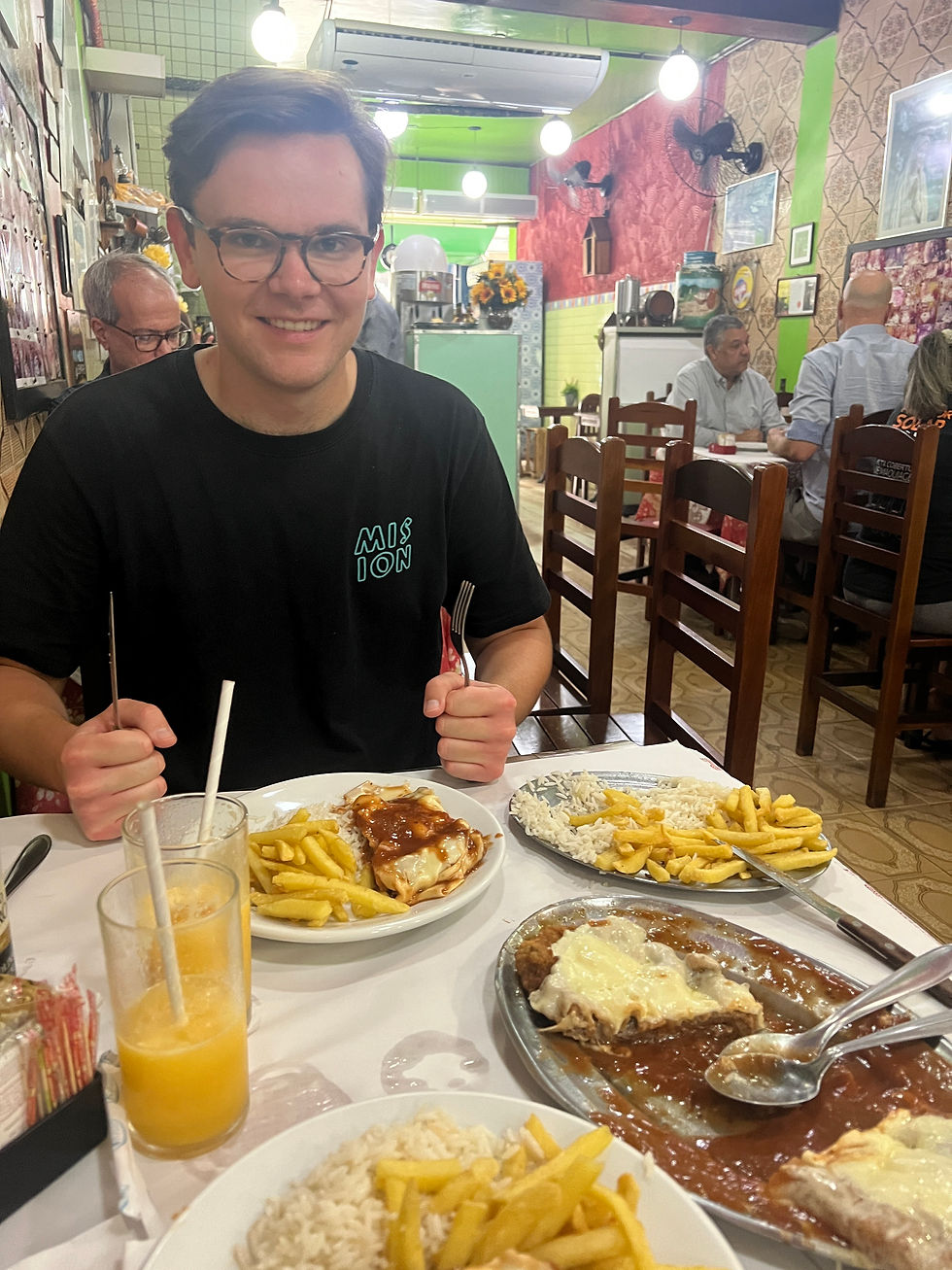
They also serve up a divine parmegiana, and the service couldn’t be friendlier. This is a real Rio experience, far off the tourist path, so I highly recommend a visit.
Churrascaria Palace
Brazil is famous for its churrascarias, all-you-can-eat steakhouses where waiters make constant rounds through the dining room carrying juicy chunks of meat on skewers. The best place in Rio to experience the rodízio is at Churrascaria Palace, a fixture of Copacabana since 1951. Located around the corner from the Copacabana Palace, the iconic hotel that is a symbol of Rio’s golden age, this restaurant is pure class. Its price is high by Brazilian standards, but this is clearly reflected in the quality of the meat. The waiters will bring around a large number of different cuts, but keep an eye out for the picanha borboleta, a variation of the traditional Brazilian cut that is a registered trademark of the restaurant.
Bar do Mineiro
This restaurant, in the colorful hilltop neighborhood of Santa Teresa, is one of the best places in the city to try feijoada, Brazil’s national dish, a black bean stew with smoked pork and beef accompanied by rice, collard greens, and orange slices.
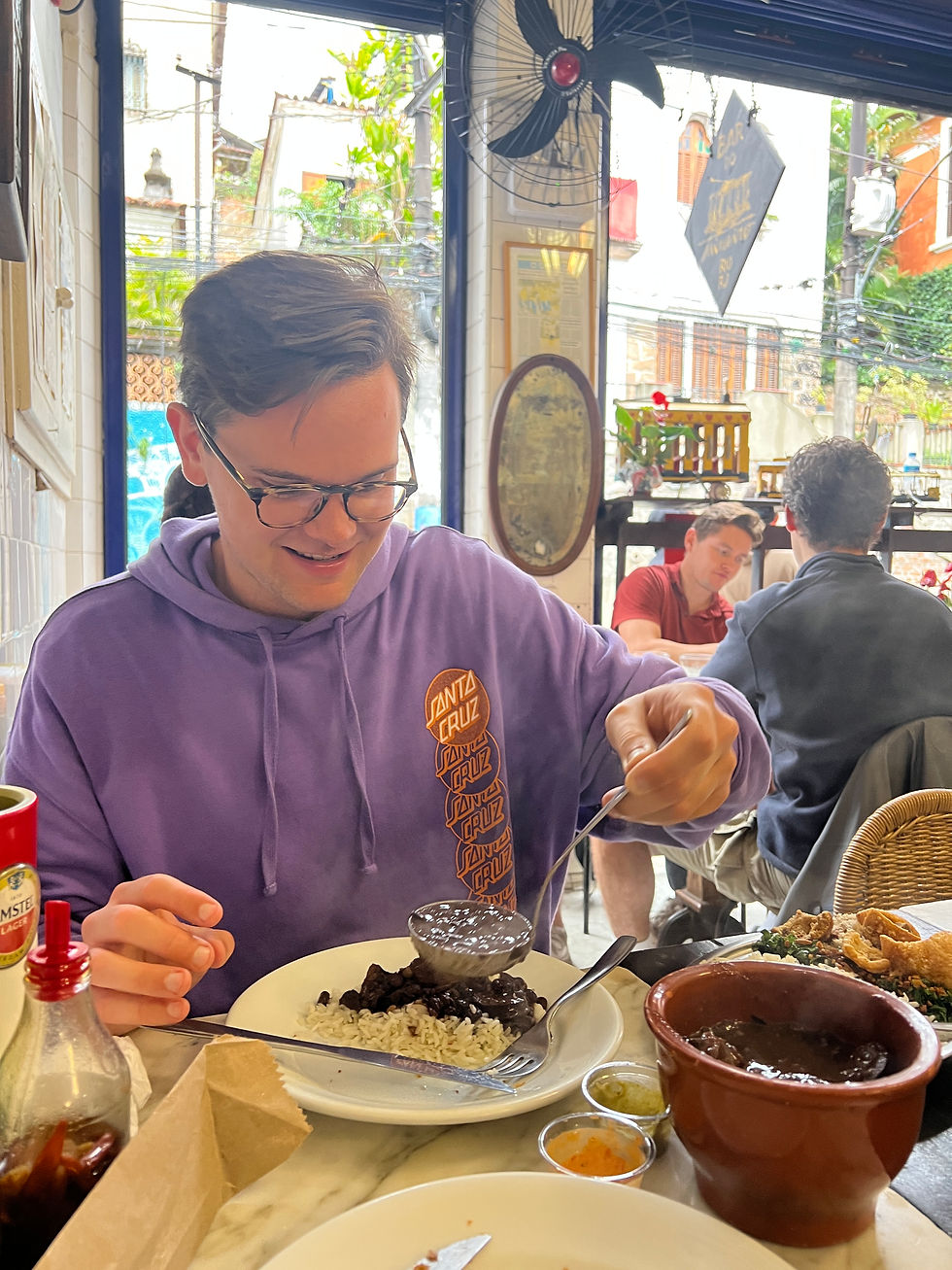
Open since 1989, the restaurant’s name and food pays homage to the state of Minas Gerais, which is considered as something like the Brazilian ‘heartland,’ famous for its hearty cuisine and friendly people. The feijoada is quite filling, but I also recommend trying some of their starters to get a taste of the regional cuisine—the Triângulo Mineiro is a mix of delectable croquettes with different fillings.

Restaurante Cervantes
Another Copacabana institution, Cervantes has been open since 1955. They are famous for their sanduíche de pernil, a roast pork sandwich that is popular throughout Brazil. What makes Cervantes unique, though, is that they were the first to serve the sandwich with a slice of pineapple (abacaxi) inside. This combination of sweet and savory flavors makes for a delicious mix that is often imitated at other bars, but it’s hard to beat the original. The place is open extremely late, and the sandwich makes for a great meal at any hour.
Galeto Sat’s
Just around the corner, Galeto Sat’s is another spot open until the wee hours of the morning that has been very popular with locals since it opened its doors in 1962. Galeto is a Brazilian style of rotisserie chicken using a chicken that is less than one month old, served alongside rice, beans, farofa, and molho à campanha, a zesty salsa made of chopped tomato, onion, and pepper with oil and vinegar. Best consumed with a cold chopp (draft beer). You’ll often see football fans gather here after matches—I’d recommend doing the same.
Restaurante Salete
Another great spot for a pre- or post-football meal is Restaurante Salete, located just east of the Maracanã. Open since 1957, this place is famous for its empadinhas, delectable miniature pies with savory or sweet fillings. Flaky, buttery, and delicious, these things are a dream. You can order the empadinhas from the takeout window outside or grab a table inside for more food and drink. They have an excellent parmigiana as well, and very friendly service.

Bar Pavão Azul
Back in Copacabana, Pavão Azul opened in 1957 and remains a typical botequim serving up bar food with a side of lively atmosphere that spills out onto the sidewalk in front of it. Their beloved dish is the patanisca, a variation of bolinhos de bacalhau (cod fritters) made with egg batter, lending it a distinct crispiness.
Bar Urca
Located in the charming neighborhood of Urca, on the backside of Pão de Açucar, this place has been open since 1939 and has two parts: a white-tablecloth restaurant upstairs and a bar at street level. The bar has no tables; just grab a seat on the wall along the sidewalk and enjoy picturesque views of Guanabara Bay.

Go on the weekend when it’s packed and soak up the atmosphere. Some popular dishes are the pastel de camarão (a sort of Brazilian empanada filled with shrimp), empada de camarão (savory pie filled with shrimp), and bolinhos de bacalhau (cod fritters), but you can’t go wrong with anything on the menu.

Garota de Ipanema
This restaurant, on a lovely street corner in Ipanema just a block from the beach, is where Tom Jobim and Vinícius de Moraes wrote their famous song ‘The Girl from Ipanema,’ which would introduce the rest of the world to bossa nova music, the ‘new trend’ emerging from 1960s Brazil. At that time, the place was known as Bar Veloso; the restaurant would later change its name to honor the song, whose lyrics were inspired by a young woman who would often stop at the bar to buy cigarettes on her way to the beach.

Apart from this fascinating history, the restaurant serves excellent food, too. The house speciality is the picanha na chapa, the famous Brazilian cut of steak sliced thinly and brought to your table on a sizzling hot plate, so you can cook it to your liking. For dessert, they have a great pastel de nata, the famous Portuguese egg custard pastry that is popular in Brazil as well.

Bar Bracarense
This Leblon classic was opened in 1961 by a Portuguese immigrant paying homage to his hometown of Braga. The sandwiches here are top notch—I recommend the bracatudo, with juicy filet mignon steak, cheese, a fried egg, lettuce, and tomato. Be sure to try some of their housemade pimenta sauce on it as well, which you’ll find a bottle of on your table. All washed down with a cold chopp, of course.
Jobi
A staple of Leblon’s nightlife, this neighborhood institution has been open since 1956 and is always packed, early or late. If you visit in the afternoon, you can get a table and get some good food and snacks (I recommend their steak sandwiches and their bolinhas de queijo, fried cheese balls); later at night, just make your way to the crowded bar for a cold chopp (bar).

Cantinho do Leblon
A casual spot for food and drinks just off Rua Dias Ferreira, Leblon’s main nightlife street, open since 1978. I recommend the ƒilé à parmegiana, hearty and delicious. This is a great spot for people watching on the crowded street outside from the comfortable terrace.
Degrau Restaurante
This white-tablecloth establishment opened in Leblon in 1963 as “Restaurante Progresso,” but it changed its name to “degrau” as a playful reference to the step outside its entrance that caused many patrons to lose their balance. It’s a classy spot with excellent service and traditional dishes from Brazilian and Portuguese cuisine.
Looking for more tips on what to see and do around the city? Visit our Rio page here.


